
The brief
The client sells eyewear for driving, sport and daily wear. The film had to show several frames from the range on different people, in the client's home market, with English dialogue.
- Placement: YouTube
- Format: 16:9
- Several frames from the range, including a children's frame
- Product material supplied by the client: photos and product information
The idea
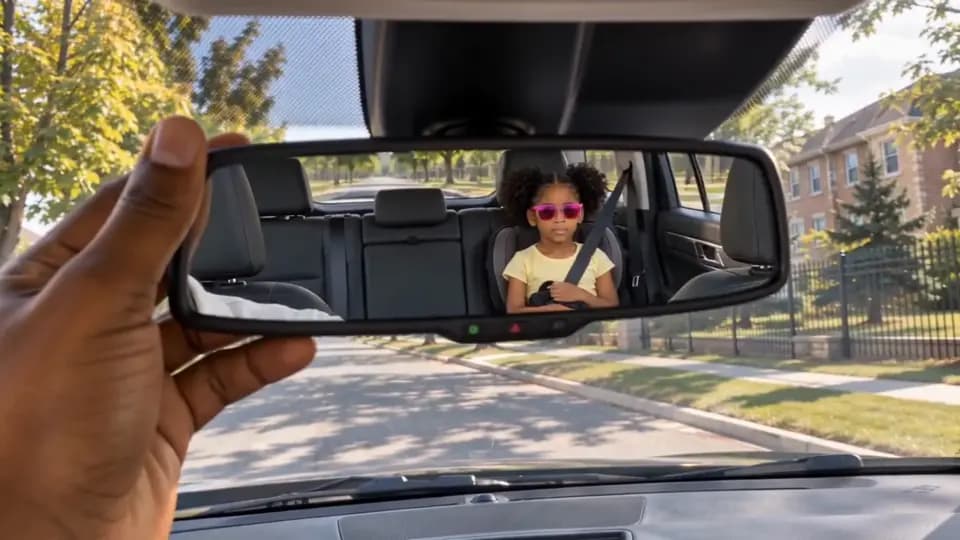
The producer proposed one line: different people, different seasons, one shared way of living. Each part is filmed as a first-person video diary, so the viewer looks through the wearer's eyes. The person and the frame are shown in reflections: water, glass, a rear-view mirror.
- Summer: a father drives his daughter to school
- Autumn: a cyclist on a road after rain
- Spring: a runner in a city park
- Winter: a skier takes on a steep run
One visual device for the product benefit
The film opens with the view through the windscreen blown out by sunlight. When the glasses go on, the exposure settles and the road becomes clear. The benefit is shown once, at the start, without a line of copy.
How five frames were kept accurate
Eyewear is a hard product for video generation: thin temples, nose pads, an inner structure and a logo that follows a curved surface. Before any shot was generated, the five frames in the film were built as 3D models, and so was the way each sits on its wearer's face. The producer reviewed every model on a page that placed it beside the client's original product photo. The models went through several rounds of correction.
- Frame shape and colour for each of the five models
- Nose pads, temples and the inside of the frame
- The direction of the logo along the temple
- How closely the frame sits on the wearer's nose and face
What the producer caught
These were found in review and corrected.
- In the first-person view, the hand held the glasses at an angle no one would use.
- In one generated shot the glasses were placed on the rear-view mirror instead of the driver. The shot instruction was rewritten to remove the ambiguity.
- A frame rested above the bridge of the nose instead of on it.
- The logo sat flat instead of following the surface of the temple.
- The daughter's second line was hard to hear. It was raised on its own.
- The end frame's typeface, line and website details were changed.
Sound, subtitles and the end frame
The soundtrack is instrumental hip-hop and jazz with no vocal, held at a steady level, with the dialogue lifted above it. English subtitles sit inside the safe area with an outline so they read on any background. The end frame carries the brand logo, a call to action and the website, and the logo is tracked onto the temple of the glasses in the final shot.
What was delivered
One 52-second film in five parts with English dialogue, subtitles and an original instrumental soundtrack, delivered for YouTube. This page does not report campaign results, because Solivo produces the film and does not run or measure the placement.